
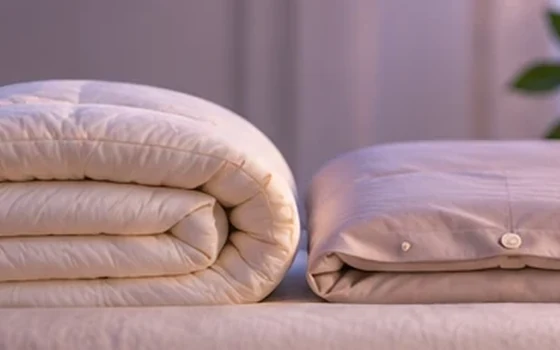
A comforter and a duvet cover are not equivalent items. A comforter contains filling. A duvet cover is a fabric shell intended to hold an insert, usually sold separately unless a set explicitly includes it. The first buying check is therefore what is actually in the package.
Identify the three different pieces
A duvet insert is the filled component. Its cover protects it and supplies the visible fabric or pattern. A comforter is generally a filled bed covering with its own finished outer fabric.
Tuft & Needle's terminology guide explains the basic distinction. Retailers sometimes use these words loosely, so read the contents list rather than relying on the product title alone.
Compare complete setups
A cover-only price should not be compared with a filled comforter as though both finish the bed. Add the insert if you do not already own one, and check whether matching pillow shams are included or extra.
For example, a two-piece duvet set may mean a cover and one pillowcase rather than a cover and insert. The number of pieces is useful only after you identify each piece.
Measure in inches, not only size names
Queen, King and oversized labels can cover different dimensions across brands. Compare the actual width and length of the insert and cover, then think about the drop you want at the sides of the bed.
An oversized cover around a smaller insert may leave empty fabric at the edges. An insert that is too large can bunch. Look for internal ties or loops if securing the insert is important to you.
Choose warmth from the filled layer
A duvet cover changes the surface fabric, but the insert supplies much of the insulation. With a comforter, examine the fill and stated warmth of the complete item. Neither category is automatically the cooler choice.
Consider room temperature, the other layers you use and whether you prefer changing inserts seasonally. Material names alone do not establish how warm the finished combination will feel.
Plan the washing and drying
A removable cover may fit a household washer more easily than a bulky filled item. That does not eliminate the insert's care needs. Read both labels, including drying requirements and whether professional cleaning is specified.
Check your machine's capacity before ordering. A bedding setup that is difficult to dry fully can become an inconvenient choice even if it looks good in the listing. Do not assume every cotton cover or synthetic fill shares the same wash instructions.
Choose the tradeoff you will actually use
A comforter can simplify making the bed because there is no separate cover to put on. A duvet system allows the visible cover to change independently of the insert. The better option depends on your routine and what you already own.
Before paying, write down the package contents, dimensions, care method and return terms. Those four checks settle more practical questions than a universal claim that one category is better.
Compare the pieces in a real setup
A comforter is a filled top layer. A duvet insert is also filled, while a duvet cover is the removable outer shell used over an insert. Listings sometimes call the complete assembly a duvet, so check what the price includes. Photograph or save the product description with the exact size and filling. A cover alone will not provide the warmth of a filled layer unless you intentionally use it as a light textile.
Measure fit and cleaning capacity
Compare the actual dimensions of insert, cover and mattress; size labels are not standardized across brands. A loose cover can bunch, while an overly tight one can compress the insert. Check corner ties or other fastening methods. Read care labels for both layers, including dryer capacity and drying time. A removable cover can make frequent cleaning easier, but it does not make the insert washable if its own care label forbids machine washing.
Think about daily handling
A comforter may be simpler to put on the bed, while a cover can let you change the visible fabric without replacing the insert. Ask who will remove and refit it for laundering. Consider weight, temperature, storage space and whether the fabric feels comfortable against your skin. If shopping for a child, follow age-appropriate sleep safety guidance; adult bedding comparisons should not be applied to an infant sleep surface.
Common questions
A little more clarity.
Can I use a duvet cover without an insert?
It can act as a light fabric layer, but it will not provide the warmth or loft of a filled duvet.
Does a cover make an insert machine washable?
No. The cover and insert have separate care labels. Follow each one.
Is a duvet cover warm by itself?
It is primarily an outer shell. Check the fabric and intended use if you want a lightweight layer without an insert.
Can any cover fit any insert of the same named size?
No. Compare actual dimensions and fastening details.
Does a removable cover mean the insert never needs cleaning?
No. Follow the insert's care instructions and maintain it as specified.
Can I use adult bedding for a baby?
Follow infant safe-sleep guidance; a comforter or duvet is not a substitute for a clear infant sleep surface.