
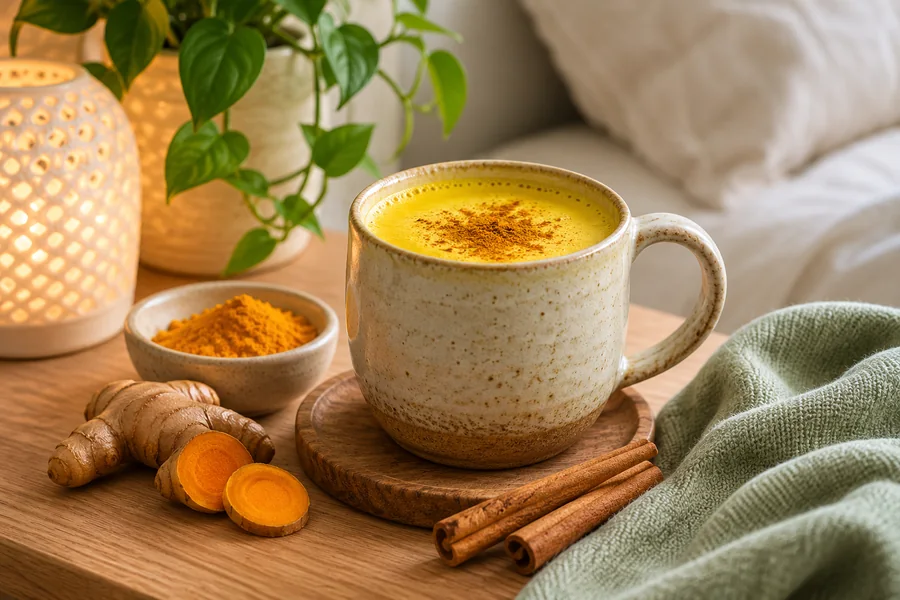
Golden milk is a turmeric-based drink often made with milk or a plant-based alternative and warming spices. You may enjoy it as part of a quiet evening routine, but that does not establish that it treats insomnia or increases deep sleep. Keep the recipe separate from claims made for concentrated supplements.
Know what is in your cup
Recipes vary. Turmeric supplies the characteristic color, while cinnamon, ginger or another spice may add flavor. The milk base, sweetener and portion size depend on your preferences and dietary needs.
A ready-made mix can contain additional ingredients, including caffeine-containing additions or supplements. Read the whole label rather than assuming every product called golden milk is a simple spice drink.
Keep the sleep claim modest
A warm drink can be an enjoyable cue to slow down, but an appealing routine is not proof of a treatment effect. This guide does not identify evidence that a particular golden-milk recipe cures insomnia.
NCCIH's turmeric overview describes substantial uncertainty about health benefits. Research on curcumin preparations cannot automatically be transferred to a small amount of kitchen turmeric in a mug.
Try a simple food recipe if it suits you
For one culinary serving, gently warm a cup of milk or a suitable alternative and whisk in about a quarter teaspoon of ground turmeric. Add a small pinch of cinnamon if you enjoy it, then taste before adding any sweetener.
Let the drink cool to a comfortable temperature. These are recipe quantities for flavor, not a therapeutic dose. You can use less spice or skip the drink entirely if it causes discomfort.
Choose ingredients around your own needs
Use a milk base that fits any allergies or intolerances, and check packaged alternatives for ingredients you avoid. Do not assume a plant-based drink is appropriate for every person with a food allergy.
If late drinks worsen reflux or lead to repeated bathroom trips, adjust the timing or choose a different wind-down activity. A bedtime ritual should not create a new reason to wake.
Do not equate the recipe with a supplement
Concentrated turmeric or curcumin products can differ greatly from food use. NCCIH notes reports of liver injury with some enhanced-absorption formulations. More concentrated does not mean more suitable for sleep.
Ask a clinician or pharmacist before adding supplements, particularly with medicines or relevant health conditions. There is no need to add absorption enhancers or combine several sleep products to follow this recipe.
Keep the larger sleep problem in view
Enjoy the drink if you like it, but do not use it to postpone help for persistent insomnia, gasping or dangerous daytime sleepiness. Those problems need an assessment appropriate to the symptoms.
If you prefer another beverage, our tea guide keeps ingredients and evidence limits visible. The choice can be about taste and routine without becoming a medical promise.
Separate a calming ritual from a treatment claim
A warm drink can be part of an evening routine, but golden milk is not an established treatment for insomnia. The recipe may contain milk or an alternative, spices, sweetener and sometimes supplements. Decide whether you enjoy the drink and whether it fits your diet, rather than expecting an ingredient to produce a guaranteed sleep effect. NHLBI's insomnia treatment guidance addresses established approaches for persistent problems.
Check ingredients and timing
Read the recipe or packaged-drink label for caffeine, added sugar and ingredients that may affect you. If you have allergies, digestive symptoms, pregnancy considerations or take medicines, ask a qualified professional before using concentrated herbal products or supplements. A culinary amount in a familiar drink is different from a high-dose extract. Keep the serving modest enough that needing the bathroom does not disrupt the night.
Evaluate the routine honestly
Try the drink only if it is pleasant and safe for you, then notice whether the whole wind-down routine changes. Avoid attributing one good night to a spice when stress, schedule and sleep opportunity also vary. If trouble sleeping persists, discuss it with a clinician; do not add more and more ingredients to chase an effect. A simple caffeine-free drink, reading or another quiet activity may serve the same purpose without a health claim.
Common questions
A little more clarity.
Does golden milk guarantee deeper sleep?
No. This article does not establish a reliable deep-sleep benefit from the drink.
Must I add black pepper?
No. It is optional in recipes, not a requirement for a proven sleep effect. Avoid treating a culinary drink as a high-absorption supplement regimen.
Will turmeric make me fall asleep?
There is no reliable guarantee. Treat the drink as a preference, not an insomnia treatment.
Can I add a supplement?
Check safety and interactions with a qualified professional, especially if you take medicines or have health conditions.
Is every recipe caffeine-free?
No. Check the actual ingredients, particularly packaged mixes.
When should I seek help?
Discuss persistent sleep difficulty with a healthcare professional rather than relying on a beverage.