
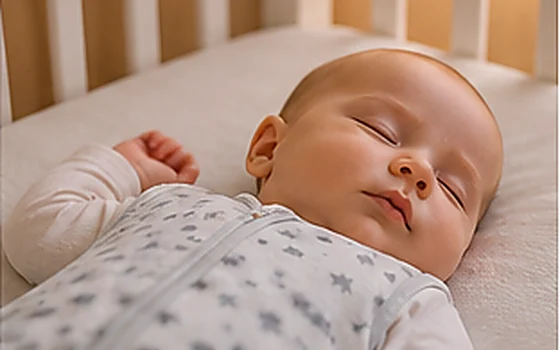
A thermostat reading of 70°F, about 21°C, does not determine one exact outfit for every baby. Fabric, layers and the room’s conditions all matter. Keep the sleep space clear and choose clothing that fits safely.
Use suitable clothing rather than loose covers
NIH risk-reduction guidance recommends appropriate clothing and avoiding overheating. A properly fitted wearable blanket can be an option. Follow the product’s sizing and instructions rather than adding loose bedding to the crib.
Do not turn a chart into a prescription
A manufacturer’s warmth guide can help interpret its own product, but it is not a universal medical instruction. Consider the layers underneath and whether the room changes overnight. Avoid combining several warm items simply because each looks light.
Check for signs of being too warm
Sweating or a hot chest can suggest overheating. Adjust clothing and seek advice if the baby seems unwell. Hands and feet alone are not a complete guide to comfort. Keep hats off indoors during sleep unless a medical team has given specific advice.
Keep development and fit in view
Use clothing that does not ride over the face and avoid weighted sleep products. If swaddling, stop when the baby shows signs of attempting to roll. Ask the pediatrician for guidance with prematurity or conditions that affect temperature regulation.
Keep the rest of the setup unchanged
Back placement, a firm flat surface and a fitted sheet remain the foundation. Our blanket guide explains why a room reading does not justify adding a loose cover during infancy.
Use the room number as one clue
A thermostat reading of 70°F does not account for drafts, bedding or an individual baby's clothing. Choose age-appropriate sleepwear that fits and check for signs of overheating. NICHD Safe to Sleep guidance recommends avoiding overheating and keeping the infant sleep area clear. Do not add a loose blanket, pillow or weighted item just because the room feels cool to an adult.
Check the baby's comfort safely
Feel the baby's chest or back of the neck rather than judging only from cool hands. Sweating, flushed skin or a hot chest can be signs of too much warmth. If the baby seems unwell or has a fever, follow pediatric advice rather than solving it with a different sleep sack. Check garment size and the maker's instructions; a loose or poorly fitted item can create its own hazard.
Keep the sleep space simple
Place baby on their back on a firm, flat, level surface with a fitted sheet. If you use a wearable blanket, choose one intended for the baby's age and follow its instructions. Do not layer products until the baby is overheated or use an adult duvet. A persistent concern about temperature, feeding or health deserves discussion with the pediatrician.
Common questions
A little more clarity.
Is one specific sleep-sack rating mandatory at 70°F?
No universal rating is prescribed here. Follow the product guidance and assess the overall clothing and conditions.
Should I add a blanket if the hands feel cool?
Do not use that observation alone to add loose bedding to an infant sleep space.
Is one outfit correct for every 70°F room?
No. Drafts, clothing and the baby's response matter.
Should I add a loose blanket?
No. Keep the infant sleep area clear in line with safe-sleep guidance.
Are cool hands proof the baby is cold?
Not by themselves. Check the chest or back of the neck and overall behavior.
What if the baby has a fever?
Follow pediatric guidance; clothing changes alone do not address illness.