
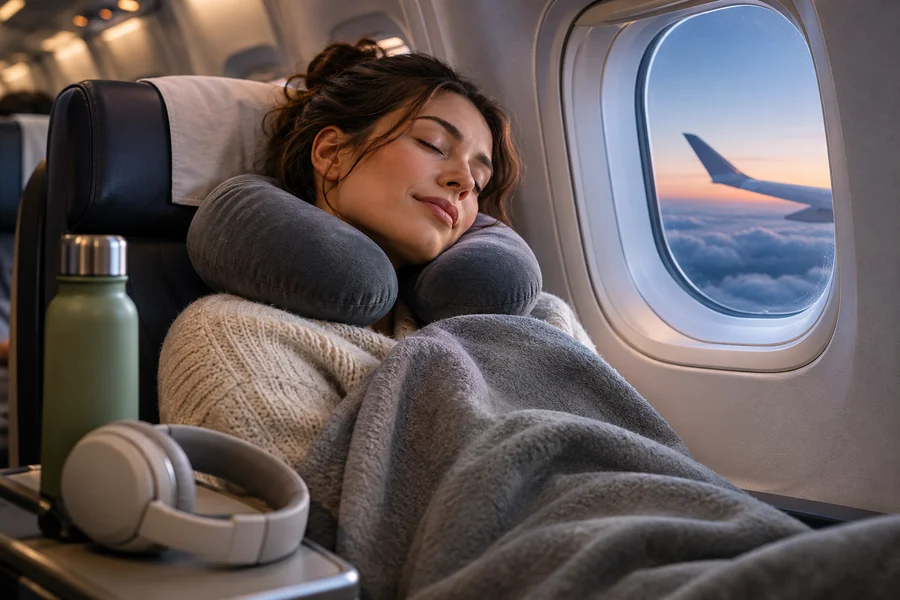
A flight is an awkward place to sleep, and no seat accessory can guarantee a full night. The most useful approach is to decide when rest fits your itinerary, reduce avoidable discomfort and leave room for recovery after landing. Cabin safety instructions always take priority over a sleep routine.
Choose a sleep window that fits the journey
Look at departure, arrival and destination time before you board. A short daytime flight needs a different plan from an overnight crossing. Avoid treating every hour in the air as an opportunity to force sleep.
The CDC jet-lag guidance discusses timing sleep and other activities around the destination. Major time changes may need an individualized plan, particularly for frequent travel or an existing sleep disorder.
Prepare a small, reachable sleep kit
Keep the items you actually use within reach: a comfortable layer, an eye mask if you like one and any approved hearing protection or headphones. Test unfamiliar accessories at home so the flight is not your first fit check.
If light is the main problem, our mask comparison helps you think about fit and pressure. A product can reduce a specific distraction without making an upright seat equivalent to your bed.
Settle the seat without blocking safety equipment
Use the headrest and a support that feels comfortable for your neck. Keep the aisle and exits clear, follow crew directions and wear your seat belt as instructed. Do not attach an improvised restraint or obstruction to the seat.
Consider neighboring passengers before reclining or arranging belongings. A simple setup is easier to adjust when meals, turbulence or cabin announcements interrupt rest.
Avoid turning medication into an experiment
Do not try an unfamiliar sedating medicine on a flight or combine sedatives with alcohol. Ask your own clinician about prescribed medicines and travel, especially if you have breathing problems or another relevant condition.
If you use prescribed PAP, arrange airline and equipment requirements in advance. Check power and battery arrangements with the relevant providers rather than assuming a seat outlet will support treatment.
Allow movement and interruptions
Follow advice appropriate to your health and journey about movement during a long flight. Rest should not mean ignoring discomfort, required checks or the need to get up when it is safe to do so.
If sleep does not arrive, quiet rest is still a more manageable goal than repeatedly checking the clock. Put away demanding work when possible and accept that the cabin may only offer short periods of sleep.
Make arrival forgiving
Leave a margin before driving or doing demanding work after a poor night. Plan transport and the first day around how alert you actually feel, not how much sleep you hoped to get.
The CDC traveler advice on jet lag explains why adjustment takes time. Resume a sensible local routine and seek advice if travel repeatedly leaves you unable to function or manage a health condition.
Compare the flight with your normal night
A short daytime flight may not need an elaborate sleep strategy. For a long overnight journey, decide when you hope to rest and when you need to be alert after landing. Time-zone changes, a connection and arrival transport all affect the plan. Keep travel documents, medication and a light layer accessible without needing to unpack the overhead bag. A neck pillow or eye mask can improve comfort for some people, but neither guarantees sleep in a noisy, upright seat.
Protect ordinary travel safety
Follow crew instructions and keep the seat belt visible and fastened as directed, even if you rest. Avoid wedging yourself against safety equipment or blocking another passenger's exit. Get up or move as permitted during a long flight, especially if you have been advised to manage circulation risk. If a health condition makes long travel difficult, ask a clinician for specific advice before the trip rather than relying on a generic sleep aid.
Use arrival to recover
Plan a manageable first day instead of scheduling demanding work immediately after an uncertain night. Daylight and a consistent local schedule may help you adjust, but one poor flight is not a failure of the whole trip. If you need to drive after landing and feel sleepy, arrange a safer option. Avoid trying a new sedative, alcohol combination or supplement for the first time in the aircraft.
Common questions
A little more clarity.
Should I stay awake all night before the flight?
Deliberately starting the journey sleep-deprived can make travel harder. Protect normal sleep beforehand where possible.
Will a neck pillow guarantee sleep?
No. It may improve comfort for you, but seat position, timing and cabin conditions still matter.
Should I deliberately miss sleep before flying?
That can leave you impaired before the journey and still may not make the aircraft comfortable. Protect ordinary sleep where possible.
Do I need a special pillow?
No. Try any accessory for comfort before travel; it will not remove noise, interruptions or seat limitations.
What if I have a medical concern about flying?
Ask a clinician for advice suited to your condition, journey length and medicines.
Should I drive after an overnight flight?
If you are too sleepy to drive safely, arrange another way home.