
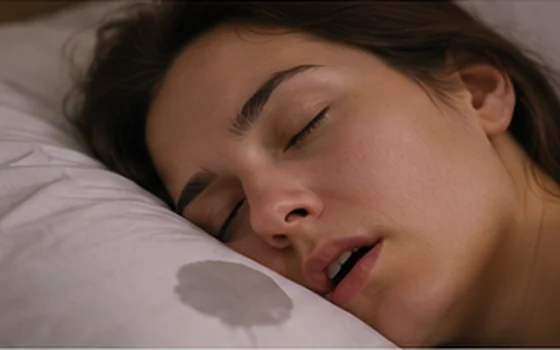
A damp pillow by itself does not identify a medical problem. New or persistent drooling, particularly with other symptoms, deserves a more careful look. The aim is to understand the cause rather than force the mouth closed during sleep.
Record what has changed
Note whether the issue is new, frequent or also present during the day. Mention mouth discomfort, congestion, swallowing difficulty and changes in medicine. A short description helps a professional decide whether dental, medical or swallowing assessment is needed.
Keep oral care practical
Oxford Health discusses saliva and drooling in the context of swallowing care and oral hygiene. Clean bedding and ordinary dental care can improve comfort, but they should not be presented as a cure for an unidentified cause.
Do not tape the mouth shut
Restricting the mouth is not a reliable general solution and may interfere with breathing. If nasal obstruction or snoring accompanies the problem, discuss those symptoms. Do not change a prescribed apnea treatment or sleeping position against clinical advice.
Know when to get help
Difficulty swallowing, choking or a sustained change needs professional assessment. Sudden facial weakness, speech change or severe breathing difficulty needs urgent help. The timing at night does not make these associated symptoms less important.
Describe the pattern before treating it
Occasional nighttime drooling can be ordinary. Note whether it is new, one-sided, frequent or accompanied by nasal congestion, snoring, choking, swallowing difficulty or daytime symptoms. A stained pillow is not enough to diagnose the cause. If a sudden neurological symptom or difficulty swallowing appears, seek urgent medical help. For a persistent but nonurgent pattern, bring observations to a healthcare professional.
Avoid risky shortcuts
Do not tape your mouth to stop drooling. If you have nasal blockage or a breathing disorder, preventing normal mouth opening could be unsafe. Changing pillows or sleep position may alter comfort, but do not use a product claim as proof of treatment. Keep bedding clean and comfortable while you investigate the reason. Ask a clinician or dentist about persistent saliva, dental or swallowing concerns rather than buying a device without diagnosis.
Look at the broader sleep picture
If loud snoring, gasping or daytime sleepiness accompanies drooling, discuss those symptoms rather than focusing only on the pillowcase. Medicines and health conditions may also matter; review them with the treating professional before changing anything. A sleep tracker cannot diagnose why saliva escapes during sleep. Keep the question specific and the response proportional to the severity of symptoms.
Common questions
A little more clarity.
Should I sleep on my back to stop drooling?
Do not make position a universal prescription, especially if you have sleep apnea or another condition.
Can a pillowcase tell me the cause?
No. Associated symptoms and a proper assessment matter more.
Is occasional drooling a disorder?
Not necessarily. Look for persistence, change or other symptoms.
Should I tape my mouth?
Avoid that shortcut, especially if breathing or nasal obstruction may be involved.
Can a pillow cure it?
A pillow may affect comfort or position but does not identify the cause.
When is urgent care needed?
Seek urgent help for sudden neurological symptoms or difficulty swallowing.
Which associated symptoms change the response?
Occasional saliva on a pillow may need little more than cleaning and observation. New or persistent drooling with swallowing difficulty, facial weakness, speech changes or another sudden neurological symptom needs prompt medical attention. Loud snoring, gasping or marked daytime sleepiness should also be discussed with a clinician, though they do not prove the reason for drooling. Note medicines, nasal blockage and any dental or mouth discomfort. Avoid mouth taping or an unapproved device to hide the symptom. A short record of when it began and what else changed is more useful than a sleep-tracker score.